Picture a courtroom scene that never happened.
A council chamber in the city of Nicaea, 325 AD. The Roman emperor Constantine sits at the head of the table. Scrolls are piled in front of him, some marked scripture, some marked heresy. One by one the bishops vote each book in or out. By the end of the session, the Bible as we know it has been born.
That scene has been retold in novels, documentaries and social posts for decades. It does not appear in any surviving record of the actual council.
What Nicaea Actually Decided
Constantine convened the bishops, traditionally numbered at 318 and estimated by modern historians at roughly 250 to 320, to resolve the Arian controversy, a dispute over whether the Son was eternally divine or a created being. The council produced the Nicene Creed, settled the calculation of Easter, and issued about twenty canons on church discipline.
Eyewitness and near-contemporary accounts survive, including from Eusebius of Caesarea and Athanasius of Alexandria. They describe the creed, the Easter question and the disciplinary canons. None of them records a vote on which books belonged in scripture.
Where the Myth Came From
Historians trace the story to the Synodicon Vetus, a ninth-century Greek text written roughly 500 years after the council, which claims canonical and apocryphal books were separated at Nicaea by placing them beside an altar and letting the spurious ones fall off. Voltaire retold that anecdote in the 18th century to question church authority, and it reached a far larger audience again in the early 2000s through popular fiction that presented it as settled history.
How the Canon Actually Formed
The real process is slower and much less cinematic. Books were read, copied and quoted in churches for generations before anyone published a list. Regional councils at Hippo in 393 and Carthage in 397 affirmed lists close to what congregations were already using. And Athanasius, in his 39th Festal Letter of 367, gives the 27 books of the New Testament essentially as they stand today, forty-two years after Nicaea and with no reference to it.
No emperor closed the book. No single meeting did either.
A Different Kind of Canon Entirely
Now picture a different scene in the same era, far to the south.
In Ethiopia, scripture was being translated into Ge'ez from Greek and Syriac texts that still included Enoch and Jubilees as a normal part of the religious library. There was no dramatic vote here either. The canon became what those translators had in hand, and it was never put through the narrowing that shaped Western Bibles. Counted title by title, it comes to 88 books. Four traditions, four totals, and the reason for each is here.
The myth of Nicaea makes a better movie. The truth is more interesting: different communities kept reading different things, and one of them never stopped.
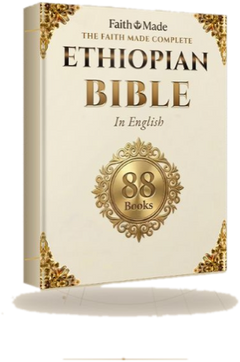
The Faith Made Complete Ethiopian Bible lets you read what that community kept, all 88 books in English.
See what survived the centuries
Where this comes from. A plain-language summary of published historical scholarship. Ancient dates and counts are reconstructions, and where scholars disagree this article says so.