I Spent $453 on 6 “Complete” Ethiopian Bibles. Only the FaithMade One Was Worth Keeping, and Here’s Exactly Why.
Nobody paid me to say this. I bought all six with my own money because I was tired of the incomplete, watered down versions everyone else settles for. This is what I found, and why I only kept one.

By Emily Johnson, Christian ResearcherUpdated Feb 2026
125,000+ Page Views · 2 min read
I’m not a pastor. I’m not a scholar. I’m just someone who got burned one too many times buying Bibles that promised “the complete canon” and delivered half of it, in print so small I needed a magnifying glass.
So I did something slightly insane. Over 12 months I ordered six different Ethiopian Bibles, the ones everyone online swears by, and spent $453 of my own money finding out which one actually holds up.
Five of them failed. Some were missing books they promised. One arrived as a single volume when I paid for two. One was a near perfect copy of another company’s website, printed with AI generated images.
And one, the FaithMade Ethiopian Bible, was the only one I still read every morning. Not because it was the cheapest (it wasn’t), but because it was the only one that got the three things right that every other edition faked.
Let me show you what those three things are, because once you see them, you can’t unsee them on any other Bible again.
How I Ended Up Down This Rabbit Hole
It started with a verse that wasn’t there.
A friend mentioned a passage from the Book of Enoch, about the fallen ones, the Watchers, and how they corrupted mankind before the flood. I went to look it up in my own Bible. It wasn’t there. Not in mine. Not in my mother’s. Not in the one sitting in the pew rack at church.
That’s when I learned something most people never do: the Ethiopian Orthodox tradition preserved 22 books that were quietly left out of the standard Bible most of us grew up with. Enoch. Jubilees. Books that were read and trusted for over a thousand years, until they weren’t.
I wanted the complete one. The whole story. So I started buying.
The first one cost me $44 and fell apart in a week. The pages were thin as newsprint and the “leather” cover was plastic. That was the moment I stopped trusting product photos and started actually testing.
The 3 Things Almost Every Ethiopian Bible Gets Wrong
It’s quietly incomplete. Most “complete” Ethiopian Bibles sold online are missing books they promise on the cover. You don’t find out until you go looking for Enoch or Jubilees and hit a blank. If it doesn’t list all 88 books openly, assume it’s cut.
It hides the name. Most editions replace “Yahweh” with “the Lord” throughout. It sounds small. It isn’t. Reading the actual name changes how the text lands. Once I read an edition that kept it, going back felt like reading a redacted document.
You literally can’t read it. Tiny, cramped type is the most common failure of all. A Bible you squint at is a Bible you close. If the print is under 9 point, it’s built to be bought, not read.
Hold those three in your head. Now here’s how the six I bought actually scored.
The Results: 6 Ethiopian Bibles, Ranked
🏆 CLEAR WINNER
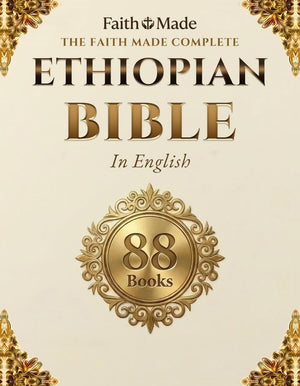
#1. The FaithMade Ethiopian Bible — 9 out of 10 (the only keeper)
This was the clear winner, and it wasn’t close.
It’s the only edition I tested that had all 88 books, openly listed, nothing quietly missing. It keeps “Yahweh” throughout instead of flattening it to “the Lord.” And the type is a genuinely readable 9.3 point, so I can actually sit with it for an hour without my eyes giving out.
It’s a single volume, which sounds minor until you’ve tried balancing a two volume set on your lap every morning. It’s the one that turned my reading from a chore back into something I look forward to.
The thing that sold me, though, was the 365 day money back guarantee. A full year. Nobody offers a year on a book they’re not sure about. That’s not a return policy, that’s a company betting you’ll never want to send it back.
Grab the FaithMade Ethiopian Bible →
#2. The Living Word Ethiopian Bible — 2 out of 10
Close to a complete scam. Uninspired layout, print small enough to fail the readability test on its own, and worst of all, I paid for a two volume set and exactly one volume showed up. Getting the second one out of them was its own 3 week ordeal. Skip it.
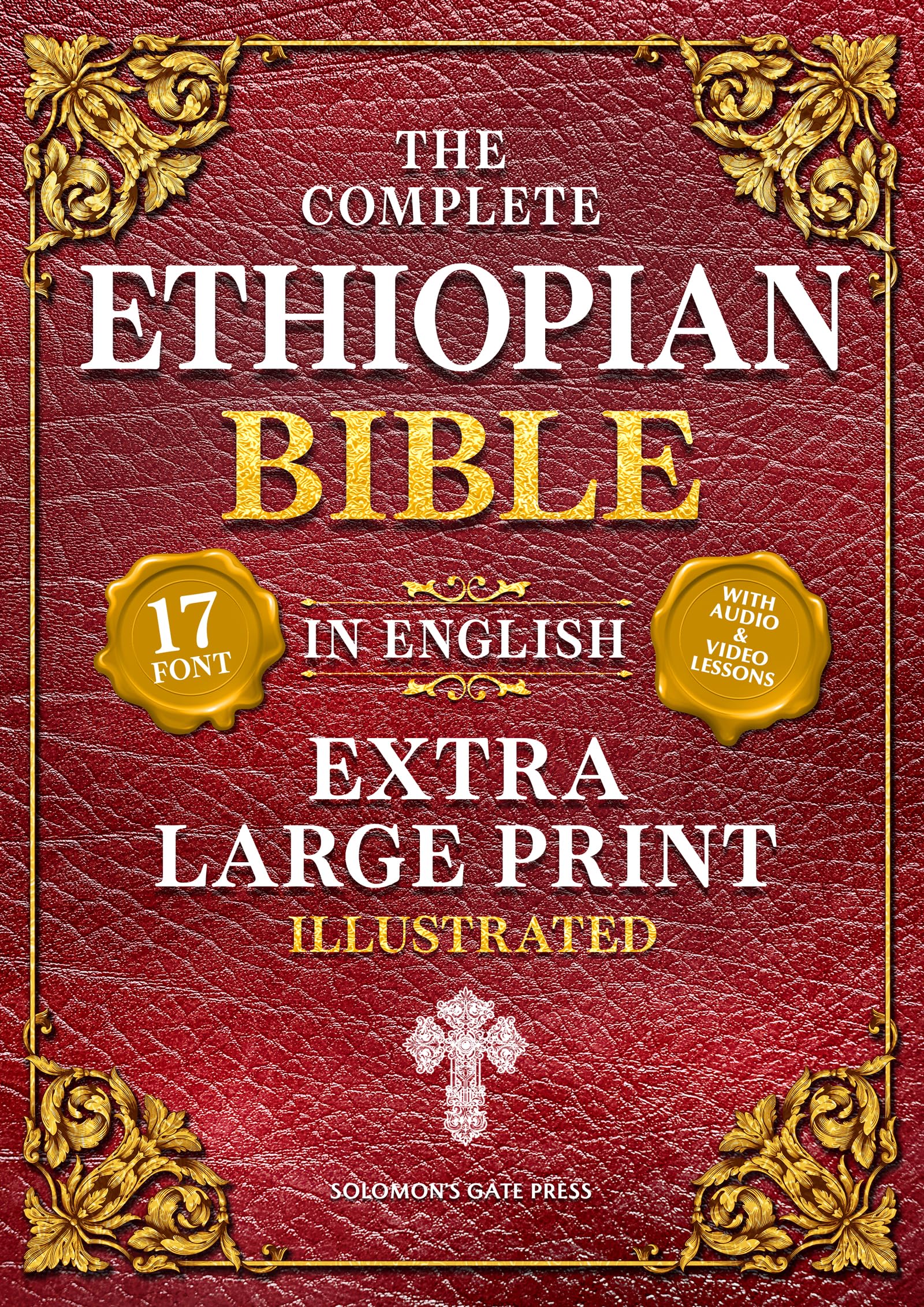
#3. Solomon’s Gatepress — 6 out of 10
Honestly? Respectable. The binding was solid and the print was clear. I just didn’t love the layout for daily reading, the way the columns were set made it feel more like a reference book than something you sit with. If FaithMade didn’t exist, this would be my pick. But it does, so it isn’t.
#4. Zion Heritage Press — 5 out of 10
The definition of fine. Complete enough, readable enough, nothing actively wrong. But nothing about it made me want to pick it up. Forgettable, and at this price a Bible shouldn’t be forgettable.
#5. “The Ethiopica” — 0 out of 10
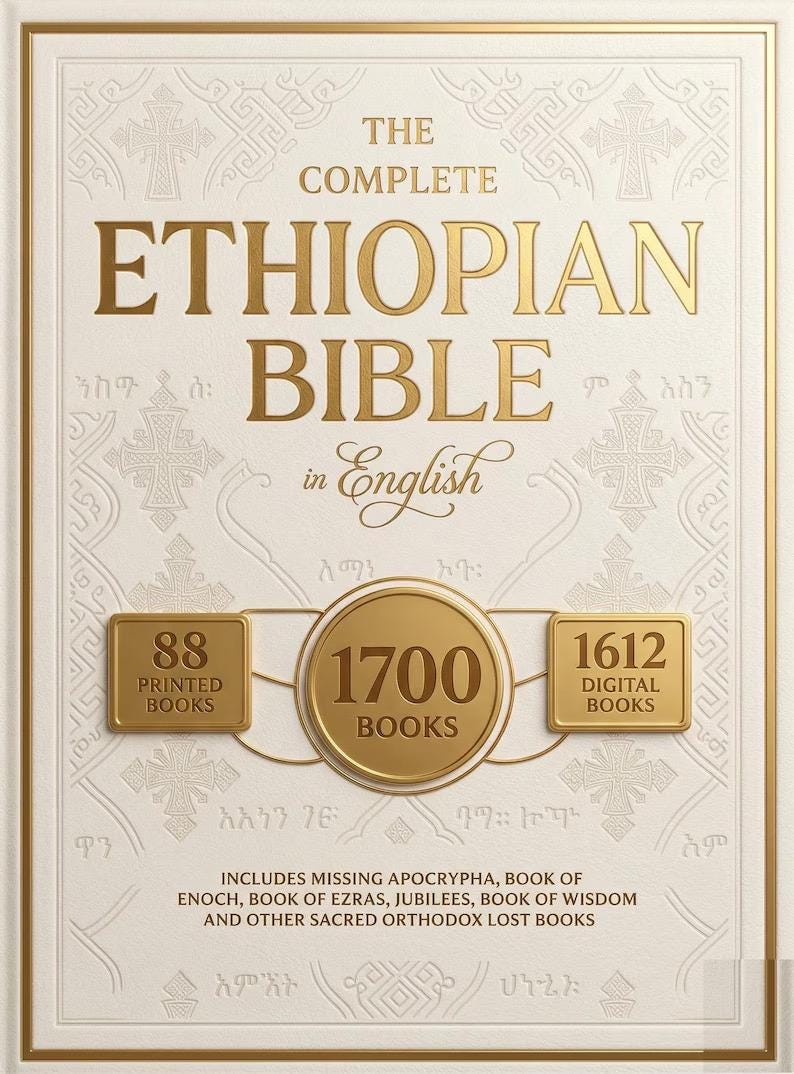
This one made me angry. It’s a near identical copy of FaithMade’s own website, right down to the layout, dressed up with AI generated images of Bibles that don’t exist. A Trustpilot rating of 1 out of 5 and a stack of formal scam complaints tell the rest of the story. This is the exact kind of counterfeit that makes people distrust the real thing. Stay far away.
#6. Amazon Listings — 4 out of 10
I wanted to like these, for convenience alone. But it’s a minefield. Inconsistent quality, reviews that read like they were written by the same three people, and a real risk of getting a counterfeit shipped to you under a legitimate looking listing. You genuinely don’t know what’s arriving until it’s at your door.
What Happened When I Actually Read It for 8 Weeks
Week 2: Passages I’d read a hundred times suddenly had context. Reading Genesis with Enoch and Jubilees nearby, the story stopped feeling like fragments and started feeling like one connected account. Things that never made sense finally did.
Weeks 4 to 6: I started noticing the gaps in what I’d been taught my whole life. Not in a bitter way, more like finding rooms in a house you’d lived in for years and never opened. And reading the name “Yahweh” instead of “the Lord” did something I can’t fully explain. It felt personal in a way the other word never did.
Week 8: The thing I’d half suspected became obvious. The books being left out wasn’t some internet conspiracy. It was just history, quiet, documented, and a little heartbreaking. I wasn’t reading a different Bible. I was reading a fuller one.
The Honest Pros and Cons
I don’t trust a review with no downsides, so here are mine.
What I loved:
- All 88 books, the complete canon, nothing quietly cut
- Keeps “Yahweh” instead of flattening the name
- One single volume that’s genuinely built for daily reading
- A full 365 day money back guarantee, the longest I found anywhere
What I’d flag:
- It’s direct sale only. That’s a good thing (it’s how they keep the quality up), but it means the Amazon resellers claiming to carry it are almost certainly selling you a counterfeit. Buy it from the actual site or don’t buy it.
- It goes out of stock. Often. When a small company makes something this good and won’t cut corners to mass produce it, this is what happens. If it’s in stock when you look, that’s the time.
So, Was It Worth $453 to Find Out?
Five wasted editions and one year later, the answer is yes, because I’d have kept buying the wrong ones forever otherwise.
If you only take one thing from all of this: don’t do what I did. Don’t spend $453 learning the difference between a Bible that’s built to be sold and one that’s built to be read. I already did that part for you.
There’s only one I still open every morning. And there’s only one place to get the real one.
Grab the FaithMade Ethiopian Bible →
In stock as of this update. Direct from thefaithmade.com only. If you see it anywhere else, it’s a counterfeit.
Visit Site →
This page is an advertisement by The Faith Made LLC. The narrator and byline are storytelling devices. Not affiliated with the Ethiopian Orthodox Tewahedo Church. 365 day refund policy applies as described on the product page. The Faith Made is a trademark of The Faith Made LLC.